Home / Crowdfunding
Crowdfunding
Prove the demand. Then make the product.
Crowdfunding lets buyers in new markets pay for your product before you commit to a full production run. Here is how it works, who it suits, and how we run it.
Why crowdfunding
The old way puts your cash in a warehouse.
Most product businesses hit the same walls: high capital outlay, factory MOQs on a product nobody has bought yet, and an expensive route overseas through trade shows and distributors.
MOQ too high? Sell before you produceWatch Alexis explain it · YouTube Short| The old way | The crowdfunding way | |
|---|---|---|
| Order of play | Manufacture, stock up, then hope it sells | Validate, pre-sell, then manufacture what sold |
| Cash | You pay the factory first | Backers pay you first |
| Going overseas | Trade shows, distributors, long sales cycles | Launch directly on the platform that market uses |
| Market data | Opinions and guesswork | Real orders, real prices, real audience data |
| Risk | Excess inventory if you guessed wrong | Production sized to proven demand |
| What you end up with | Stock | Customers, social proof, and often resellers |
Who it suits
Built for product owners, not idea collectors.
Your product doesn't need to be groundbreaking or patented. It does need to exist, ship internationally, and be something a stranger understands in seconds.
A good fit
- You have a working prototype or a product already selling at home
- It's a physical consumer product that can ship overseas
- You want to enter the US, Japan, Taiwan, Hong Kong or Korea
- You'd rather prove demand than guess at a production run
- You can invest in creative and pre-launch ads before the campaign
Not a fit (yet)
- No product, and no plan to develop or source one
- Products that can't legally ship to the target market
- Prohibited categories: weapons, drugs, alcohol, adult content, financial services
- Expecting the platform to find buyers for you, with no pre-launch
- Margins too thin to cover ads, fees and shipping
Home, kitchen & living
Drinkware, lunch boxes and home goods.
Beauty & grooming
Razors, skincare tools and personal care.
Lifestyle & accessories
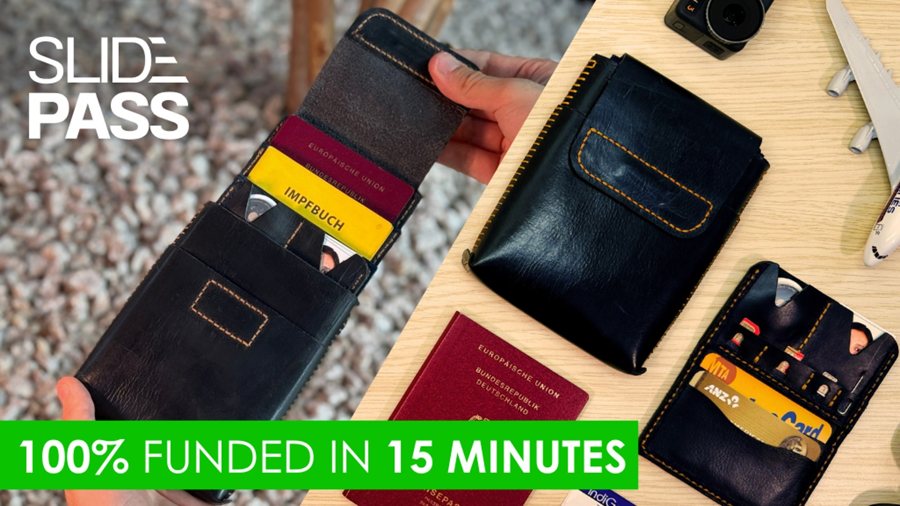
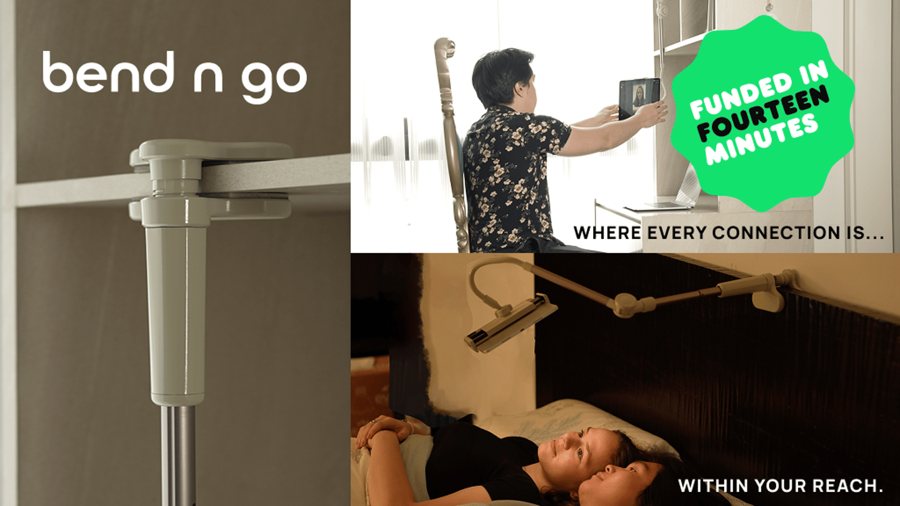
Wallets, bags, travel gear, desk and screen accessories. See SlidePass and BendNGo.
Food, wellness & B2B
Supplements, wellness products, and B2B products with a clear use.
Who backs campaigns
Backers aren't shoppers. They're early adopters.
Knowing how they think changes how you price, pitch and plan.
Support new ideas
They back something before it exists, and like being first.
Less price-sensitive
They pay for design and novelty, not the lowest price.
Patient
They'll wait for delivery, as long as you keep them updated.
Pre-orders as awareness
Every backer is a customer and a voice for your brand.
Campaigns as market intel
You learn who buys, at what price, in which country.
Reuse across markets
The same product and video can launch again in the next country.
The Alexis Method
Validate. Position. Build demand. Launch. Scale.
Five steps, in this order. Most failed campaigns skip the first and third.
- 01
Validate
Find out whether customers want it, and at what price.
You get: A go, fix or stop decision.
- 02
Position
Who it's for, why they'll care, what it costs, which market first.
You get: A pricing and launch plan.
- 03
Build demand
Lead page, $1 reservations and pre-launch ads.
You get: Warm buyers before day one.
- 04
Launch
Campaign page, video, ads, email and backers.
You get: A strong first three days.
- 05
Scale
Next country's platform, then e-commerce and resellers.
You get: A product in several markets.
One product, many countries
Each market has its own platform.
The playbook: prove the product on one platform, then roll the same campaign out country by country.
| Platform | Market | Who's there | How we use it |
|---|---|---|---|
 Kickstarter Kickstarter | US / global | The largest crowdfunding site, with backers in 100+ countries | International credibility. Often the first launch for a global brand. |
 Indiegogo Indiegogo | US / global | Global audience, plus InDemand for sales after the campaign | Launch, or continue pre-orders after Kickstarter ends |
 Makuake Makuake | Japan | Japan's major platform, tech-savvy buyers | Strong for made-in-Japan and design-led products |
 ZecZec ZecZec | Taiwan | Taiwan's largest platform, focused on design and innovation | Usually launched after Kickstarter |
 Searching C Searching C | Hong Kong | Local platform for innovative and design products | Entry to Hong Kong, often through a reseller |
 Wadiz Wadiz | Korea | Korea's leading crowdfunding platform | Korea roll-out |
After crowdfunding: e-commerce (Shopee Singapore, Taiwan, Indonesia), then resellers. Morph Bento, for example, went on to Costco and RT-Mart in Taiwan, Hallmark in Hong Kong, Amazon US and 20 stores in Japan.
The numbers
Revenue raised is not profit earned.
A campaign that "raised" six figures can still lose money. Ads, cost of goods, platform fees, tax and shipping all come out before you see a profit. We model these before launch, not after.
The example on the right is a live ZecZec campaign. A 6.95 return on ad spend and a product cost of 20% of the price left a 52.6% net margin. Many products don't have numbers like these, which is exactly why the assessment checks your margin first.
Costs and other questions → Sold out but losing money? The hidden costsWatch Alexis explain it · YouTube ShortProof
See it applied to real products.
Funded Kickstarter campaigns by founders who learned the method.